
In Brittany, a real estate project involves multiple stakeholders whose scopes overlap: municipality, intercommunal authority, department, national operators. The difficulty does not stem from the number of steps, but from the order in which to undertake them and the dependencies between them. A building permit submitted before verifying the sanitation zoning, a MaPrimeRénov’ file prepared without an approved advisor, or a rental without an up-to-date DPE are all obstacles that can extend a timeline by several months.
My Renovation Advisor in Brittany: a step in the process, not an optional advice
For large-scale renovations, support from an approved professional is mandatory. The My Renovation Advisor program is not an optional advisory service: it is a prerequisite for accessing national aid for comprehensive renovation projects. Ignoring this step means submitting an incomplete file.
The advisor intervenes before the work begins. They assess the energy situation of the housing, propose a coherent work plan, and assist in compiling the financing file. Their role also includes follow-up until the end of the project.
In practice, a Breton homeowner wishing to renovate must incorporate this service into their schedule from the reflection phase. Contacting an advisor after signing quotes with artisans risks having to revise the entire project to meet eligibility criteria for aid.
We observe that the confusion between support and a simple energy audit remains common. The audit is a one-time diagnosis. Support covers the entire process, from the initial assessment to the completion of the work. The two do not substitute for one another.
To centralize information on renovation, construction, or rental, the services of the Brittany website gather the main regional resources by type of real estate project.
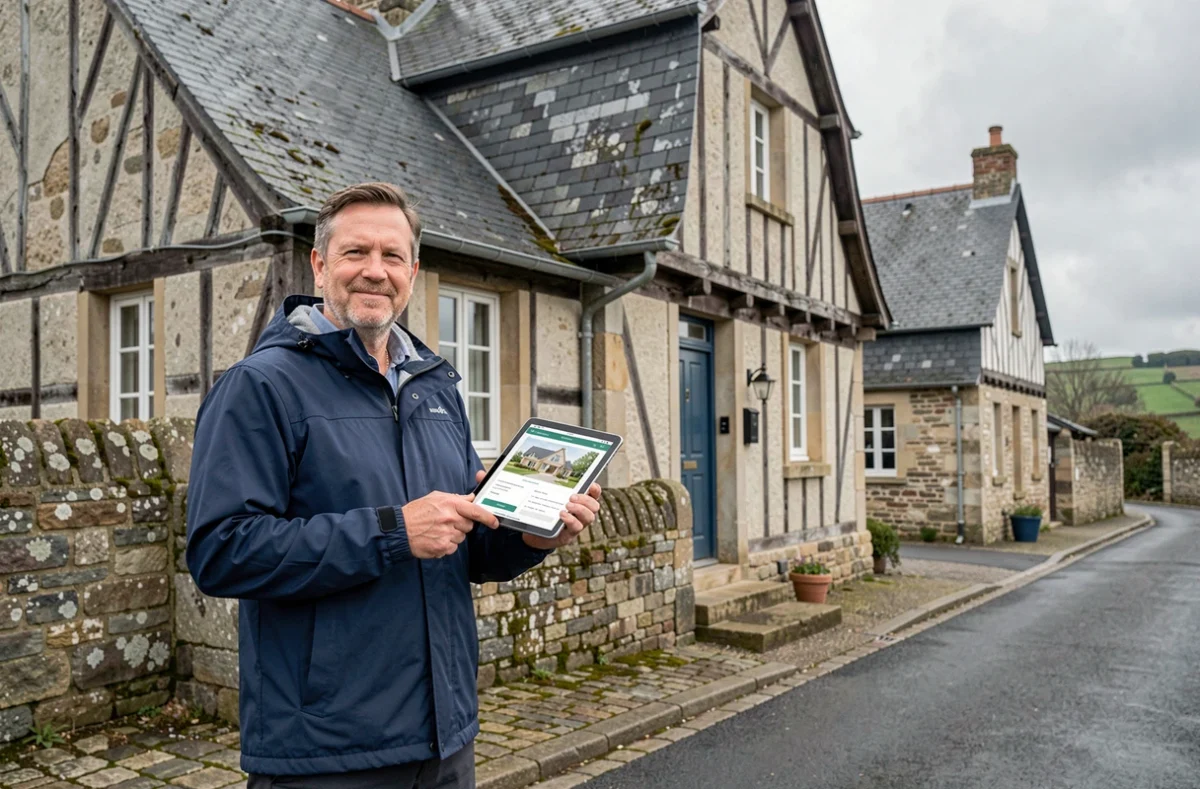
DPE and rental in Brittany: distinguishing legal obligation and aid conditions
Homes classified as G can no longer be offered for rent since 2025. Subsequent deadlines concern classes F and then E. This constraint directly impacts Breton landlord owners, many of whom are in town centers where the old rental stock predominates.
A homeowner is not subject to the obligation to renovate solely due to a poor DPE. The most immediate constraints target rental. The nuance is crucial: it changes the level of urgency, the type of work to prioritize, and the available aid.
Before launching an energy renovation project, checking the current conditions with France Rénov’ avoids relying on outdated information. The scales, ceilings, and technical criteria evolve regularly. A file prepared based on previous conditions may be rejected or require additional documents that delay the disbursement of aid.
Rental project or personal occupation: two distinct paths
A homeowner living in their property can plan their work over a longer horizon. They choose the areas of intervention based on their comfort and budget, without a strict regulatory timeline related to the DPE.
The landlord, on the other hand, must achieve a minimum energy performance level before signing a new lease. This calendar pressure requires coordinating diagnosis, support, work, and updating the DPE within a constrained timeframe. Confusing these two situations leads to inappropriate decisions.
Local aid in Brittany: what complements national programs
Beyond MaPrimeRénov’ and energy savings certificates, additional aid may be offered by Breton local authorities. Intercommunalities, departments, regions: each territorial level may have its own programs, with specific eligibility criteria and ceilings.
These local aids are not always visible on national platforms. A homeowner who limits themselves to the online simulator from Anah may potentially miss out on significant additional funding.
To identify these programs, the preferred points of contact are:
- The France Rénov’ spaces present in the Brittany territory, which centralize information on national and local aid and direct to approved advisors.
- The France Services houses, which offer assistance for common administrative procedures (identity documents, registrations, as well as guidance towards housing-related services).
- The housing services of intercommunalities, which manage programmed housing improvement operations (OPAH) and are aware of the specific aids within their scope.

Walk-in services and online services: adapting the channel to the type of procedure
Some home-related procedures can be handled entirely online: prior declaration of work, connection request, consultation of the local urban plan. Others require an in-person exchange, especially when a financing file combines multiple sources of aid.
Local walk-in services remain the most reliable channel for complex projects. An appointment with a France Rénov’ advisor or an agent from the France Services house allows for verifying the coordination between national and local aids, identifying missing documents, and setting a realistic timeline.
Brittany urban planning and zoning: preliminary checks for any construction project
Before purchasing land or submitting a building permit, three checks determine the feasibility of the project:
- The zoning of the local urban plan (PLU or PLUi) determines the rules of constructibility, placement, and height applicable to the targeted parcel.
- The sanitation zoning specifies whether the land falls under collective or individual sanitation, which impacts the budget and design of the project.
- Public utility easements (coastal protection, historical monument perimeter, wetland area) may restrict or prohibit certain developments.
In Brittany, the Littoral law applies over a wide coastal strip and in many retro-coastal municipalities. It limits the extension of urbanization outside already urbanized areas. A plot deemed buildable under the PLU may turn out to be unbuildable under this law. Cross-referencing the two documents before any acquisition avoids an irreversible blockage.
The urban planning services of municipalities and intercommunalities issue urban planning certificates (informative or operational) that summarize all applicable rules for a parcel. Requesting an operational urban planning certificate before signing a sales agreement remains the most effective precaution to secure a construction project in Brittany.