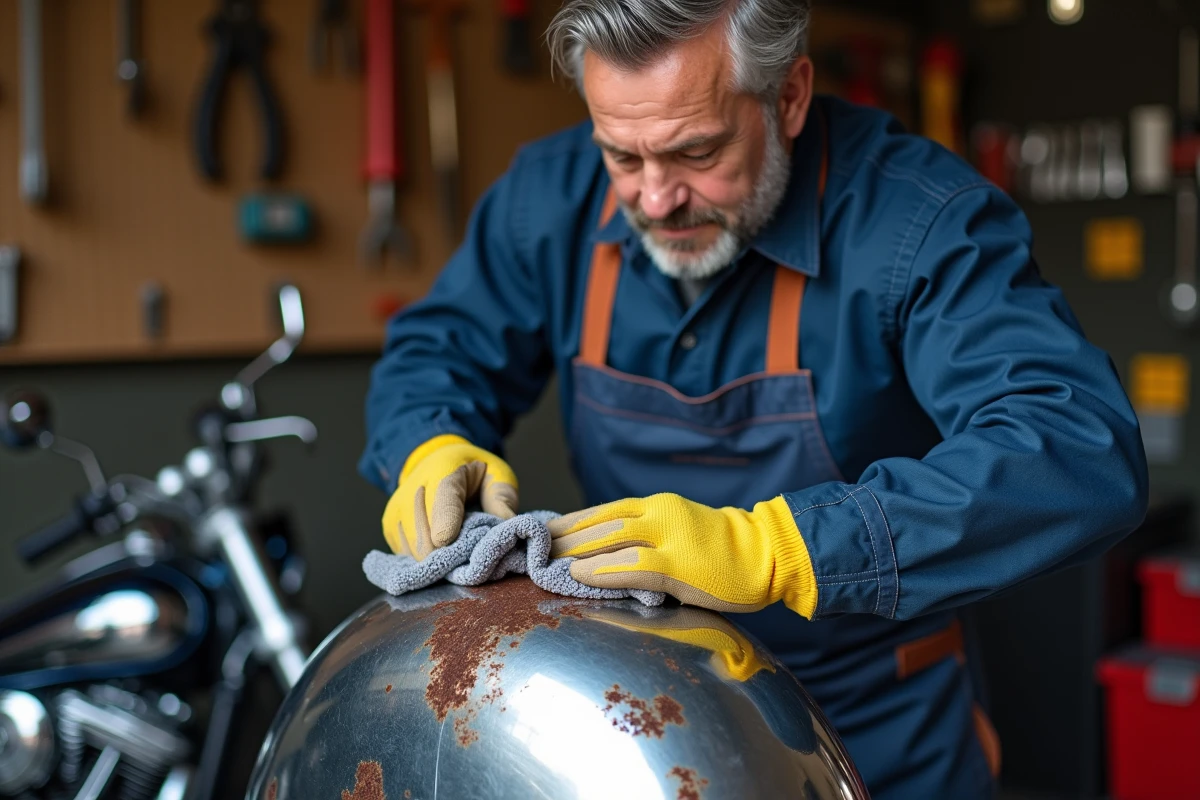
Orange stains on a bathroom faucet, a tarnished bicycle handlebar, a bumper losing its shine: rust on chrome is a common problem, but rarely addressed properly. Chrome plating forms a very thin protective layer on the metal. When moisture seeps through a micro-crack, rust attacks the underlying metal and rises to the surface.
Removing rust from chrome without damaging this thin film requires choosing the right method at the right time.
Surface rust or deep pitting: know what you’re dealing with
Before scrubbing anything, take a close look at your chrome piece. Have you noticed that some stains come off with a simple wipe, while others resist everything? The difference lies in the depth of the attack.
Surface rust forms an orange or light brown veil. It deposits on the chrome without having penetrated it yet. At this stage, a gentle cleaning is enough to restore the shine. The chrome underneath is intact.
Pitting, on the other hand, appears as small dark craters, sometimes clustered together. The chrome is penetrated, and corrosion has reached the base metal (steel or brass depending on the piece). No household trick can recreate the missing chrome layer. In this case, the only lasting solution is professional re-chroming through electrolysis.
Why does this distinction matter? Because scrubbing deep pits with an abrasive, even a mild one, enlarges the craters and accelerates degradation. If you see gray metal under the stains, focus your efforts on protection rather than stripping. To better understand how to remove rust from chrome based on the degree of damage, this visual assessment is the first step.
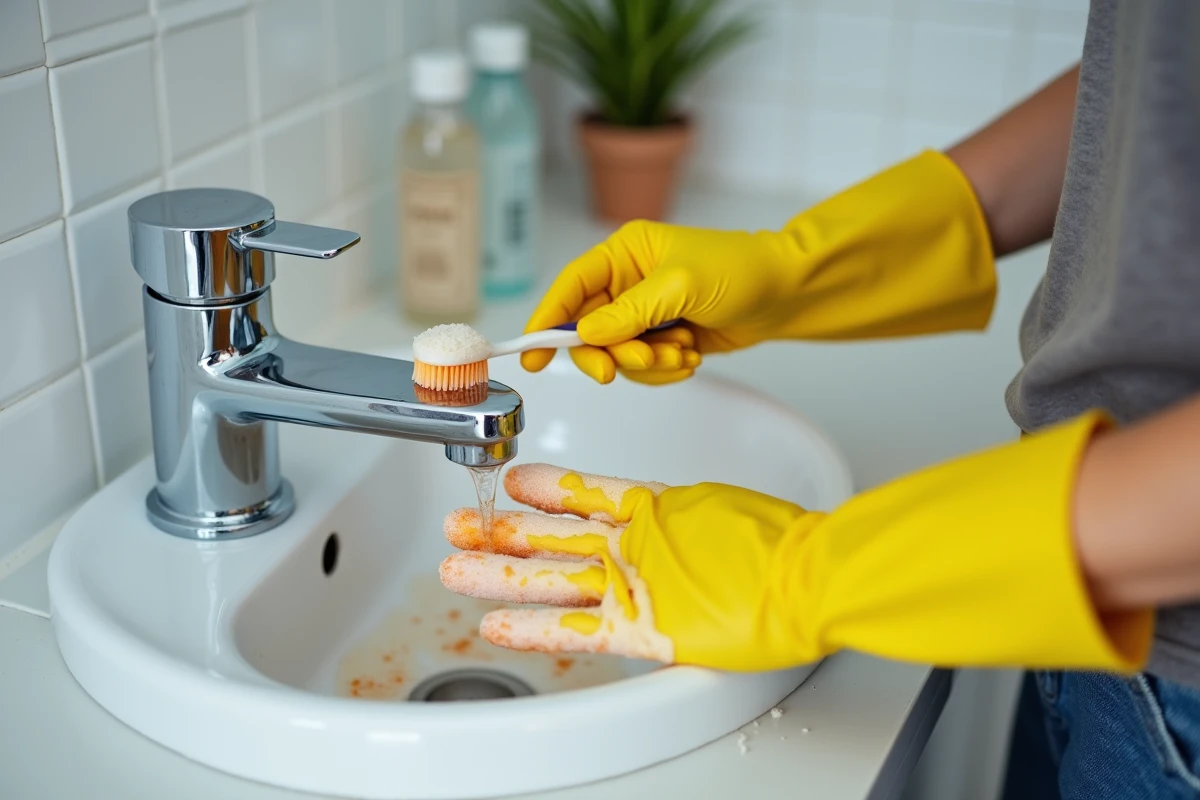
Aluminum foil and white vinegar: the ultimate chrome method
This technique is found in all bicycle and motorcycle restoration workshops, and for good reason: it works on surface rust without scratching the chrome.
The chemical principle in two words
Aluminum is more reactive than chrome on the metal reactivity scale. When you rub a damp sheet of aluminum on the rust, the aluminum “attracts” the oxygen bound to the oxidized iron. The rust detaches without attacking the chrome.
White vinegar (acetic acid) accelerates this reaction by dissolving the mineral deposits that sometimes trap the rust. It softens the oxidized layer and facilitates the mechanical action of the aluminum.
Step-by-step procedure
- Cut a sheet of aluminum into squares the size of your palm. Crumple them slightly to create an irregular surface, but not sharp.
- Soak the square in pure white vinegar, or in a mixture of equal parts vinegar and water if the surface is lightly affected.
- Rub the rusty area with light circular motions. You will see a gray paste form: this is aluminum oxide mixed with dissolved rust.
- Rinse with clear water, then dry immediately with a soft microfiber cloth. Never let chrome dry in the open air, as residual water can restart oxidation.
On a bicycle handlebar or an old car bumper, the result is often visible within minutes. If the rust persists after two passes, you are likely facing deep pits.
Baking soda and lemon: alternatives for light stains on chrome fixtures
Don’t have aluminum on hand? Baking soda mixed with a few drops of lemon juice forms a slightly abrasive paste, suitable for recent rust stains on fixtures.
Apply the paste to the chrome surface with a soft cloth. Rub gently: baking soda acts as a micro-abrasive that polishes without scratching. Let it sit for two to three minutes if the stain persists, then rinse thoroughly.
This method works well for faucets, bathroom accessories, and small decorative chrome pieces. For larger surfaces (bumpers, motorcycle rims), the aluminum-vinegar duo remains more effective and faster.
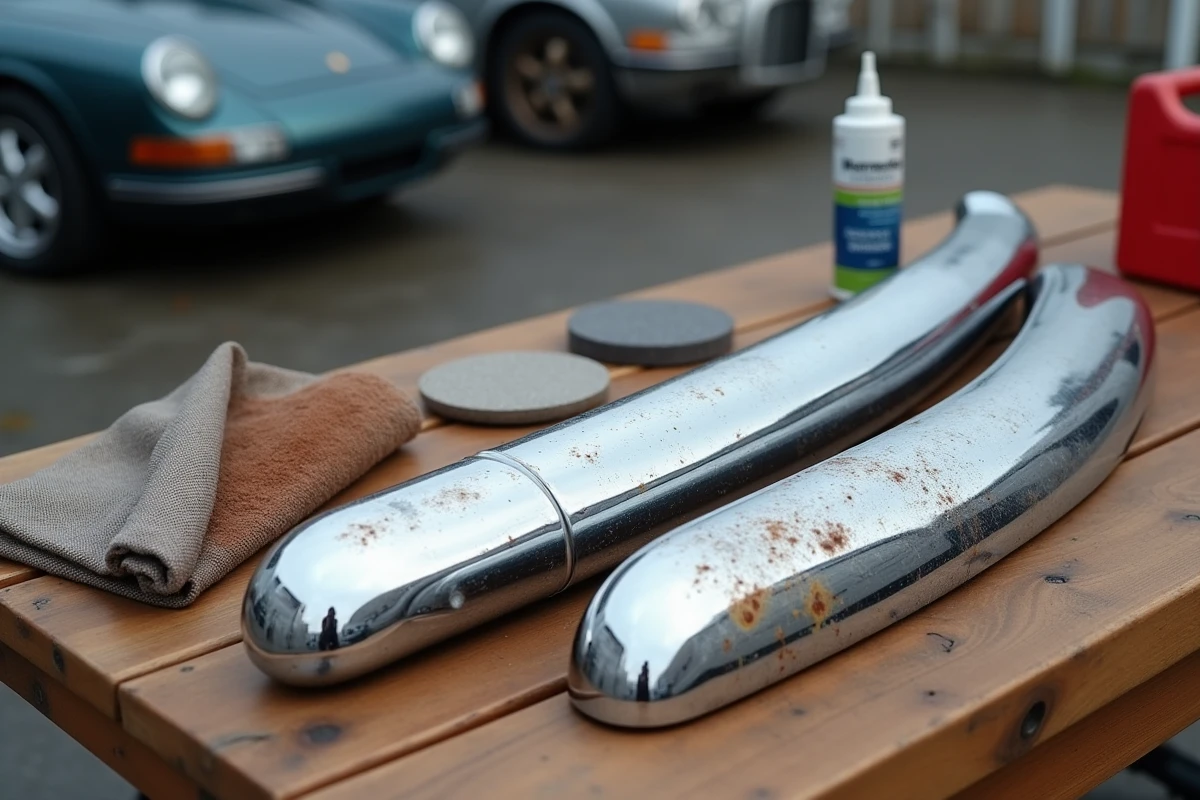
Protecting chrome after cleaning: the step everyone forgets
Removing rust without protecting the surface is like repainting a wall without a primer. Corrosion will return, often within weeks if the piece is exposed to moisture.
After cleaning and complete drying, apply a thin layer of protective wax (car wax or specific chrome wax). The wax fills the micro-cracks in the chrome and blocks moisture.
For pieces that remain outside (motorcycle chrome, garden furniture), renew this protection every two to three months. A quick wipe with a dry cloth after each exposure to rain extends the life of the treatment.
What to avoid on a chrome surface
- Steel wool or regular abrasive pads: they scratch chrome irreversibly, even the so-called “fine” models.
- Hydrochloric acid or strong strippers: they dissolve the chrome itself, not just the rust.
- Air drying after cleaning: trapped water droplets in corners restart oxidation within hours.
Have you noticed white rings on your chrome after washing? These are mineral deposits. They are not rust, but they weaken the chrome layer by creating anchor points for moisture. A quick wipe with diluted white vinegar removes them.
Chrome pitted beyond cleaning: when to consider re-chroming
If after your cleaning attempts, black spots or craters remain visible, the chrome is penetrated. No household product can rebuild a chrome layer. The piece must be stripped, polished, and then re-chromed through electrolysis in a specialized workshop.
Re-chroming through electrolysis deposits a new layer of chrome on the base metal. This technique allows for treating complex shapes (handles, ornaments) without the risk of abrasion. The cost varies depending on the size of the piece and the condition of the underlying metal, but it is the only way to restore new chrome on a severely corroded piece.
For low-value pieces (standard bathroom accessories), replacement is often more economical. For collectible pieces (vintage motorcycle chrome, vintage furniture elements), re-chroming remains the standard.
Rust on chrome is best treated when caught early. A dry cloth after each contact with water, a layer of wax every quarter, and a quick inspection of exposed areas are enough to keep your chrome surfaces shining for years.