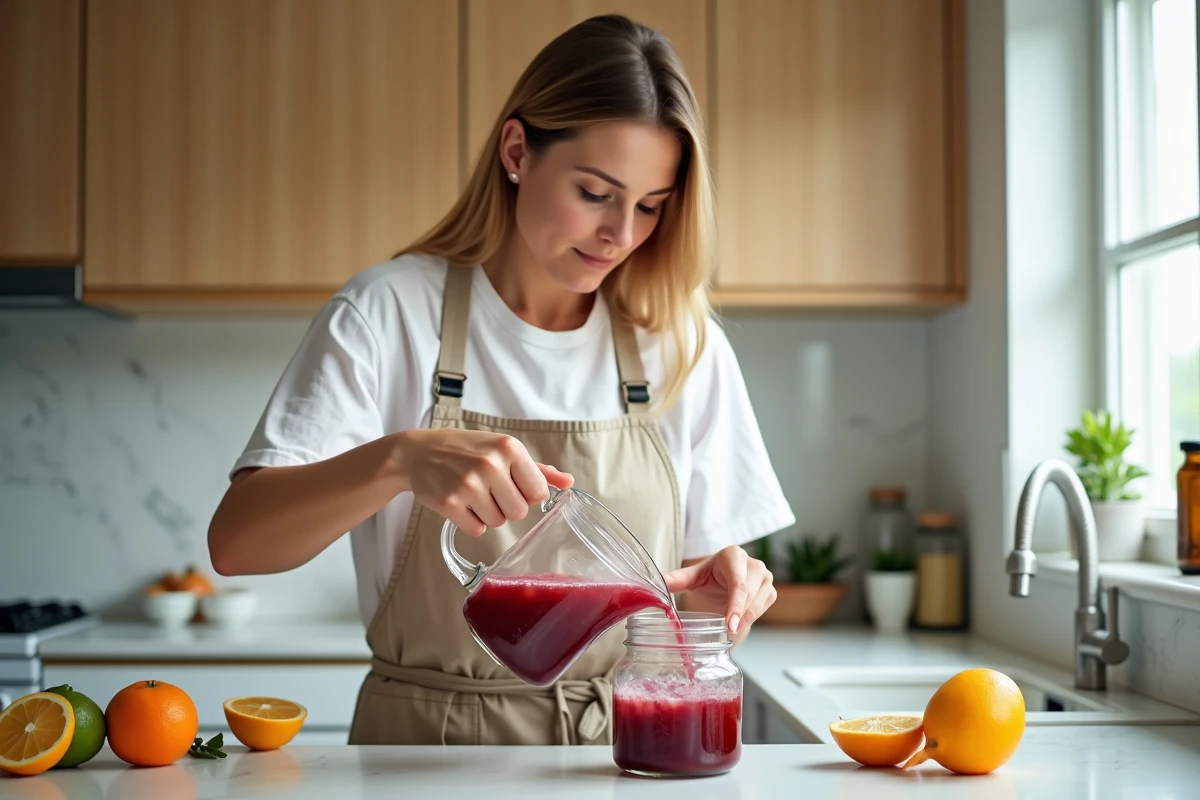
Freezing a punch seems simple: pour, seal, and wait. However, the result depends on variables that are rarely measured, including the alcohol content of the mixture, the type of fruits used, and the speed at which the cold penetrates the liquid. Understanding these parameters allows you to store a punch in the freezer without sacrificing its flavors or texture.
Alcohol Content and Freezing Point of Punch: What Changes Depending on the Recipe
The behavior of a punch in the freezer directly depends on its alcohol content. A household freezer rarely goes below -18 °C, which is not sufficient to solidify all mixtures in the same way.
| Punch Alcohol Content | Result in Freezer (-18 °C) | Texture Obtained |
|---|---|---|
| Less than 10% vol | Almost complete freezing | Ice block, marked crystals |
| Between 10 and 15% vol | Partial freezing | Granita, semi-solid |
| Above 15-18% vol | Does not fully solidify | Semi-liquid mass like “slush” |
A punch with a low rum content freezes almost entirely, with a high risk of ice crystals that alter the taste upon defrosting. In contrast, a punch heavily loaded with spirits remains pasty and may leak if the container is not perfectly airtight.
The question of storing punch in the freezer therefore arises differently depending on each recipe. Adjusting the juice/alcohol ratio before freezing, or simply knowing what to expect, avoids unpleasant surprises at serving time.
Citrus or Tropical Fruit Punch: Freezing Treats Them Differently
Punch recipes vary greatly in their fruity base. This difference, often overlooked, has a direct impact on the result after being placed in the freezer.
Citrus: Marked Phase Separation
Punches with a high citrus content (orange, lemon, grapefruit) are the most sensitive to extreme cold. They undergo a marked phase separation between water, pulp, and sugars. The texture degrades even before the taste is truly affected. Upon defrosting, the mixture appears diluted, as if water had been added, a phenomenon confirmed by several testimonies on forums regarding sangria.
Tropical Fruits: Pectin as an Ally
Punches made with mango, guava, or passion fruit fare better. The natural pectin in these fruits limits the formation of large ice crystals and maintains a more homogeneous texture after defrosting. The result remains closer to the original punch, with less loss of flavors.
For a mixed punch, it is better to increase the proportion of tropical fruits if freezing is planned, and reserve fresh citrus for adding at serving time.
Quick Freezing in Thin Layers: The Technique That Preserves Flavor
The speed of freezing radically changes the final quality. The faster the punch freezes, the smaller the ice crystals remain, and the less they damage the structure of the mixture.
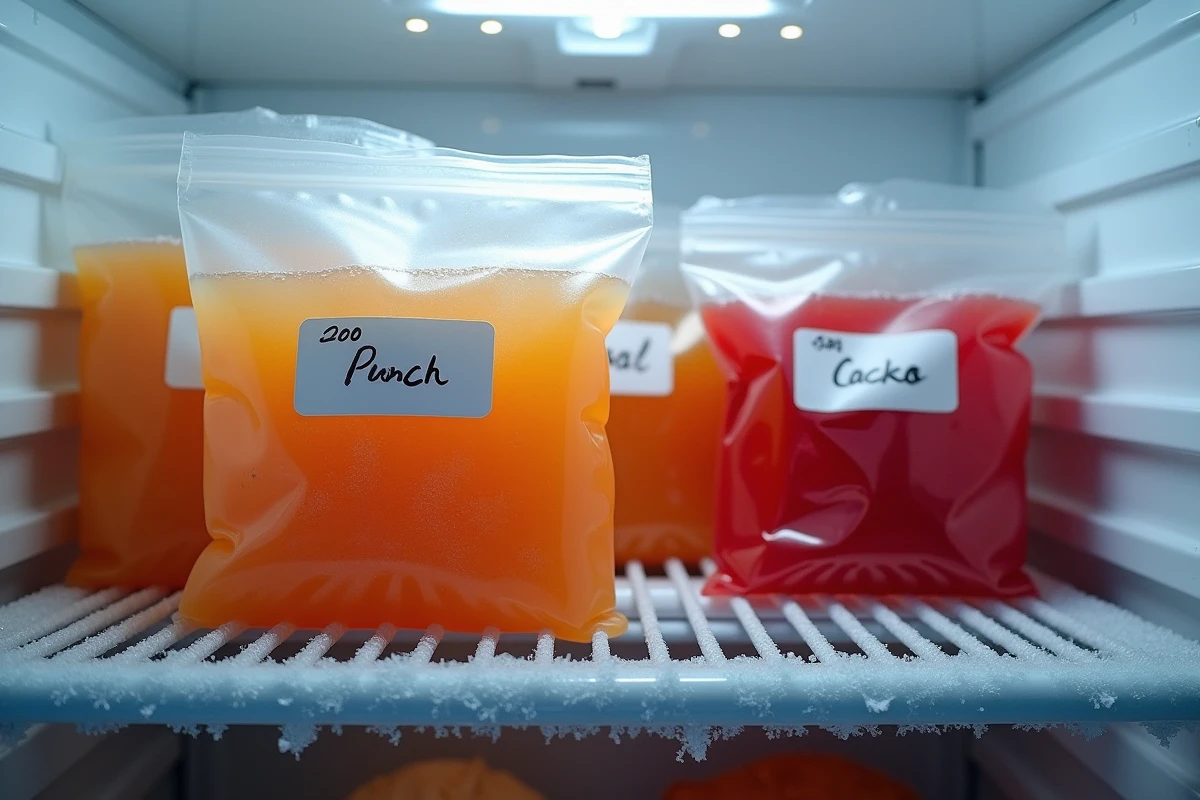
The most effective method is to freeze the punch in a thin layer rather than in a large bottle:
- Pour the punch into flattened freezer bags (zip type) in layers a few centimeters thick, to speed up the cooling process
- Use shallow trays if the quantity is large, leaving room for the expansion of the liquid as it freezes
- Avoid glass bottles, which may burst under pressure, and prefer food-grade plastic containers with at least one-fifth of the volume left free
Quick freezing in thin layers reduces the size of the crystals and limits phase separation. The defrosted punch retains its texture and aromas better than a punch frozen slowly in a large container.
Defrosting and Serving Frozen Punch: Mistakes to Avoid
Defrosting is just as important as freezing itself. Taking a punch out of the freezer and leaving it at room temperature causes uneven defrosting: the edges melt first, creating local dilution that alters the balance of flavors.
Defrosting slowly in the refrigerator remains the most reliable method. The punch gradually regains its liquid consistency without thermal shock.
Two often overlooked points deserve attention:
- Carbonated beverages (lemonade, sparkling water, soda) should never be added before freezing. They lose all their fizz in the cold. Incorporate them only at serving time
- Fresh fruit pieces do not handle the freezing-defrosting cycle well. Their texture becomes spongy and their juice dilutes into the mixture. It is better to add them fresh to the serving bowl
- Never refreeze a punch that has already been defrosted, as the multiplication of crystallization cycles accelerates the degradation of flavors and the separation of ingredients
A punch prepared in advance and properly frozen can be stored without issue for several weeks. The exact duration depends on the alcohol content and the quality of the packaging, but beyond two to three months, flavor loss becomes noticeable even with good freezing techniques.
The most determining factor remains the choice of fruits and the alcohol content. A moderately dosed tropical punch, frozen flat in airtight bags and defrosted in the refrigerator, yields a significantly better result than a citrus punch stored in a bottle for months. Adapting the recipe to the storage method, rather than the other way around, makes all the difference.