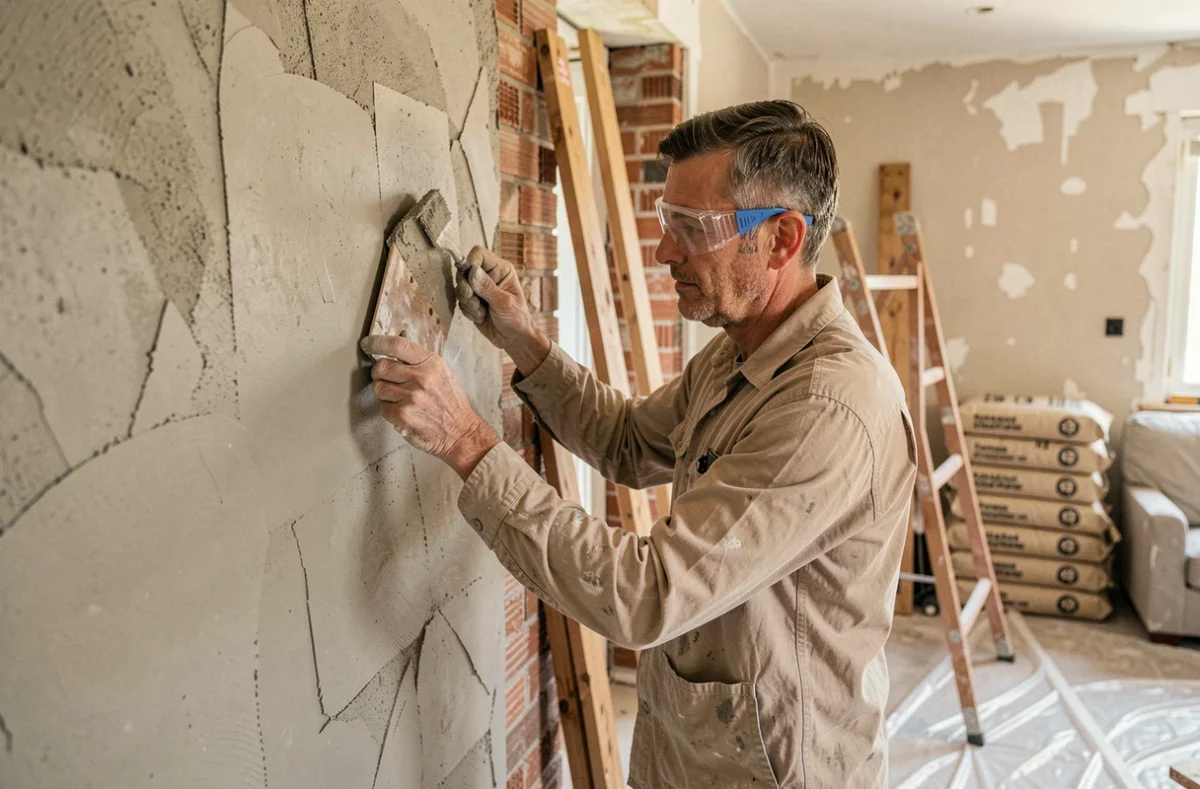
A cracked load-bearing wall in a 70s house, a roof that has been letting in moisture for two winters, heating bills that keep rising despite a low thermostat setting: these are the concrete signals that trigger most renovation projects. Understanding the different types of renovation work helps prioritize correctly and, above all, prevents spending a budget on a secondary issue while a structural problem worsens.
Diagnosis before work: what the structure requires before your desires
Renovation rarely starts with aesthetic choices. In most cases, the actual condition of the structure dictates the first project. A moisture diagnosis, a check of the framework, or a thermal analysis reveal priorities that the naked eye does not always perceive.
A wall that seems healthy may hide rising damp. A roof without visible leaks may have weakened battens. The technical diagnosis determines the entire order of the project. Without this step, one risks redoing interior insulation on a damp wall, which accelerates degradation instead of slowing it down.
When consulting the work on Renov Motiv, one notices that the categories of renovation are numerous, and it is precisely this variety that makes prior diagnosis necessary to target the right type of intervention.
Specifically, three checks should be made before any quote:
- The structural condition (foundations, load-bearing walls, framework) determines if heavy work is necessary before any comfort improvements
- The level of existing insulation and thermal bridges guide the choice between partial or complete energy renovation
- The condition of the networks (electricity, plumbing, drainage) may require compliance updates that disrupt the planned schedule

Structural renovation and major works: the work that cannot be postponed
Structural renovation concerns the very framework of the home. This involves addressing foundations, reinforcing a floor, replacing a framework, or treating cracks on a load-bearing wall. These are heavy renovation works, often the most expensive, but postponing them systematically worsens the situation.
An untreated structural crack can double the intervention cost in a few years. Timber framework affected by wood-eating insects does not stabilize on its own. These on-site observations justify prioritizing major works in the schedule, even if the initial budget only covered a refresh.
Roof and framework
The covering protects everything else. One does not renovate the interior of a house with a leaking roof. Replacing tiles, repairing flashings, and treating the framework constitute a separate lot, often prior to attic insulation.
Foundations and drainage
In older houses built without a crawl space, rising moisture through capillarity degrades finishes, floor coverings, and indoor air quality. Perimeter drainage or resin injection in the walls may be necessary before considering any other work.
Energy renovation: insulation, ventilation, and heating in the right order
Energy renovation of a house is not just about installing insulation. The effectiveness depends on the order in which interventions are made. Insulating without revising ventilation creates condensation problems that degrade the structure and air quality.
The recommended approach follows a simple logic: first reduce heat loss (insulation of walls, roof, ground floor), then adapt the ventilation system to the new level of airtightness, and finally size the heating according to actual needs, which have become lower.
Insulation of walls and roof
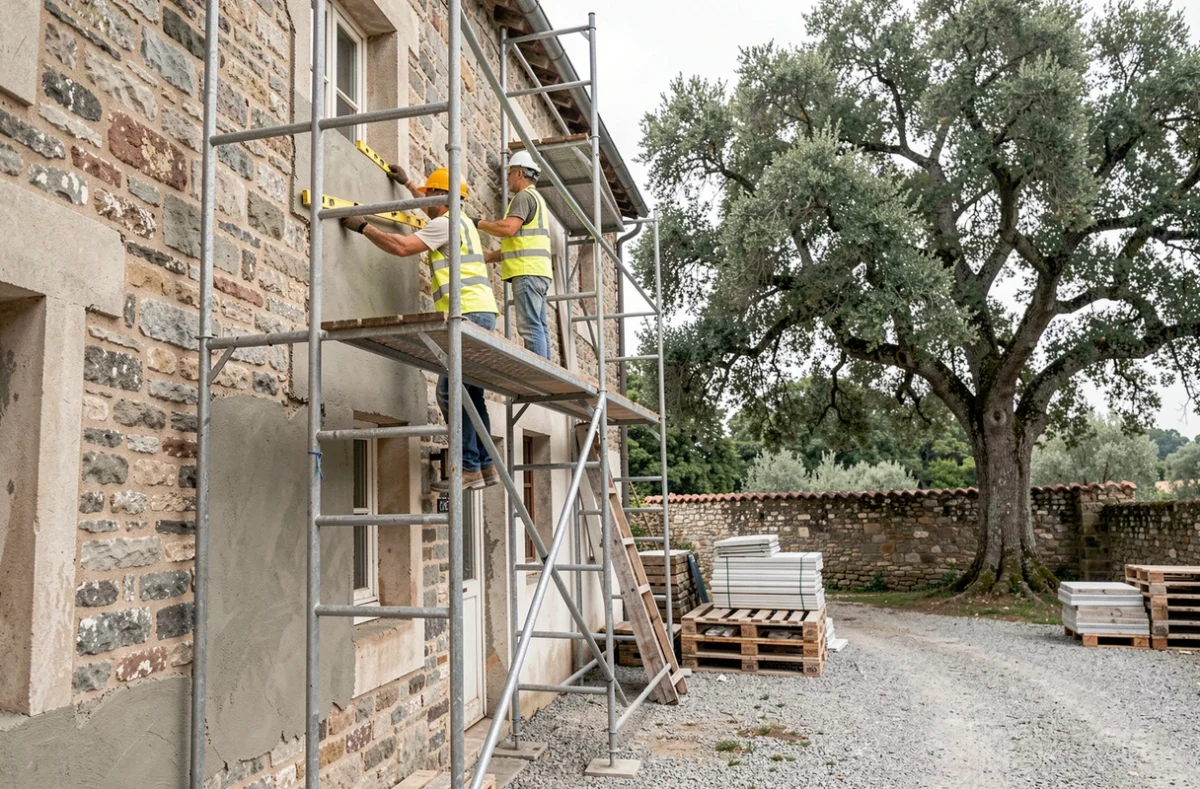
External insulation eliminates most thermal bridges but alters the appearance of the facade, which sometimes requires prior declaration at the town hall. Internal insulation is less expensive but reduces the living space. Returns vary on this point depending on the chosen thickness and the configuration of the rooms.
Mechanical ventilation
A single-flow MVHR is sufficient in many cases. The more efficient double-flow MVHR requires a duct network that is often difficult to integrate into an existing house without false ceilings. The choice of ventilation system depends as much on the structure as on the budget.
Heating replacement
Changing a boiler or installing a heat pump without having insulated is like heating a sieve. The sizing of the new system is done after insulation work, not before. This is a common mistake that leads to oversizing the equipment and increasing the bill.
MaPrimeRénov’ and renovation aids: a system to check at the time of the quote
Financial aids for renovation exist, but their actual availability fluctuates. MaPrimeRénov’ saw a significant recovery in 2025 after the difficulties of 2024, a period marked by a pause that blocked many files. This type of variation requires checking the conditions in effect at the precise moment one signs a quote.
The classic trap: planning a project relying on aid, then discovering that eligibility criteria have changed between the quote and the submission of the file. To limit this risk, one submits the aid request before signing with the contractor and ensures that the company is RGE certified (Recognized Guarantor of the Environment), a nearly systematic condition for public schemes.
Interior renovation and finishes: the visible project, but not a priority
Painting, floor coverings, replacing the kitchen or bathroom: these interior renovation works are the ones that are immediately noticeable. They improve daily comfort and enhance the property’s value upon resale.
They are scheduled last, once the structure is sound, the envelope insulated, and the networks compliant. Redoing a bathroom before addressing a moisture problem guarantees having to redo it in a few years.
The home improvement market showed signs of slowing down in 2025, with a decrease in volumes for the first time in several years. The availability of companies and timelines may vary by region and trades. Anticipating quotes several months in advance remains a useful precaution, especially for technical lots like electricity or plumbing.
A well-sequenced renovation project – structure, thermal envelope, networks, then finishes – avoids costly rework and protects each investment. The initial diagnosis remains the best expense one can incur before touching the first wall.