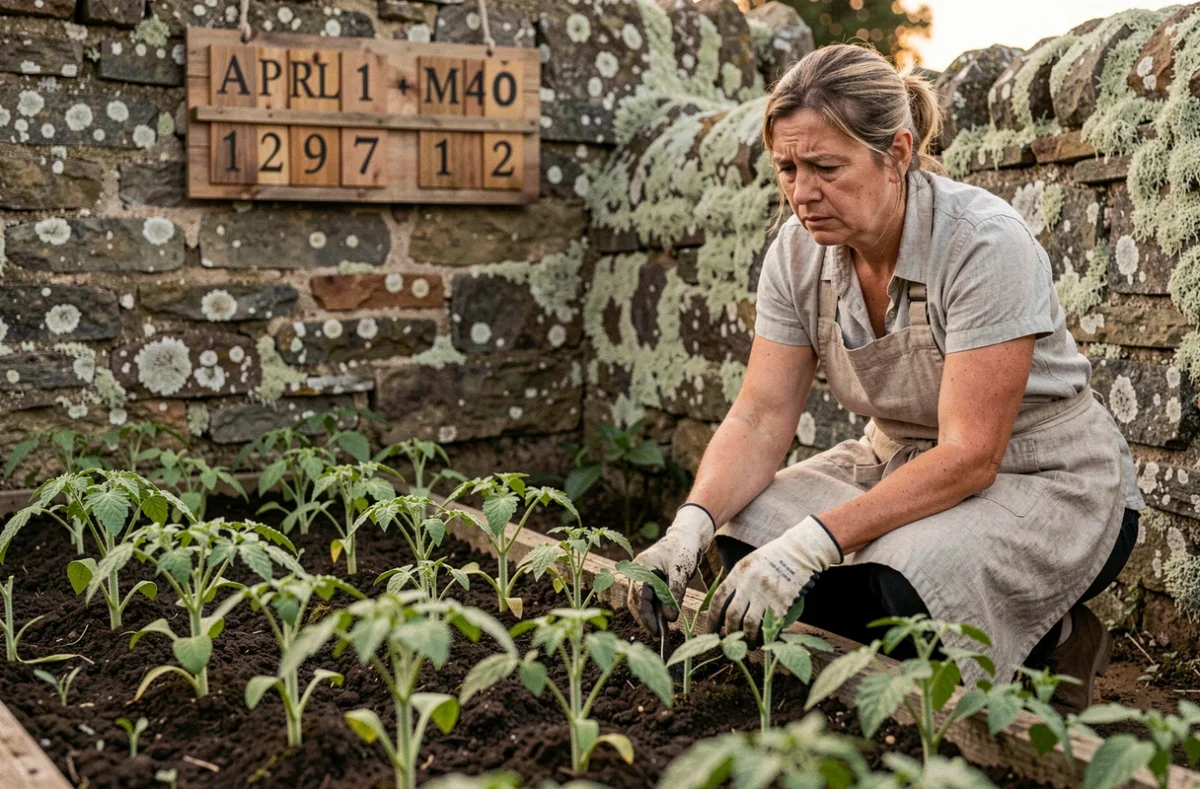
A vegetable garden in Vercors, tomato plants transplanted in mid-April under generous sunshine, and a clear night that drops the thermometer below zero: the leaves turn brown in just a few hours. This classic scenario has a name in the gardener’s vocabulary, the red moon. In 2026, this period extends from April 17 to May 16, and it is better to prepare concretely rather than rely on luck.
Radiative frosts during the red moon: the real mechanism to watch
It is often said that the moon “burns” plants. The phenomenon has nothing to do with the celestial body itself. It is the clear, windless nights that cause frosts, through infrared radiation from the ground to the sky. When no clouds reflect heat back down, the temperature at the plant level can drop well below what is recorded in a weather shelter.
This discrepancy between the announced temperature and the one your plants experience is a common trap. Météo-France reports damage when the mercury drops below -2 °C for about ten hours, or below -5 °C for more than two hours. In basins where cold air accumulates, these thresholds are reached while the nearest station shows 1 or 2 °C above zero.
Understanding the red moon 2026 in France requires distinguishing between what pertains to the lunar calendar and what pertains to local weather. The lunar month following Easter sets the period, but it is the combination of clear skies, light winds, and enclosed terrain that triggers ground frost.
Early budding and late frost: why the risk increases in certain years
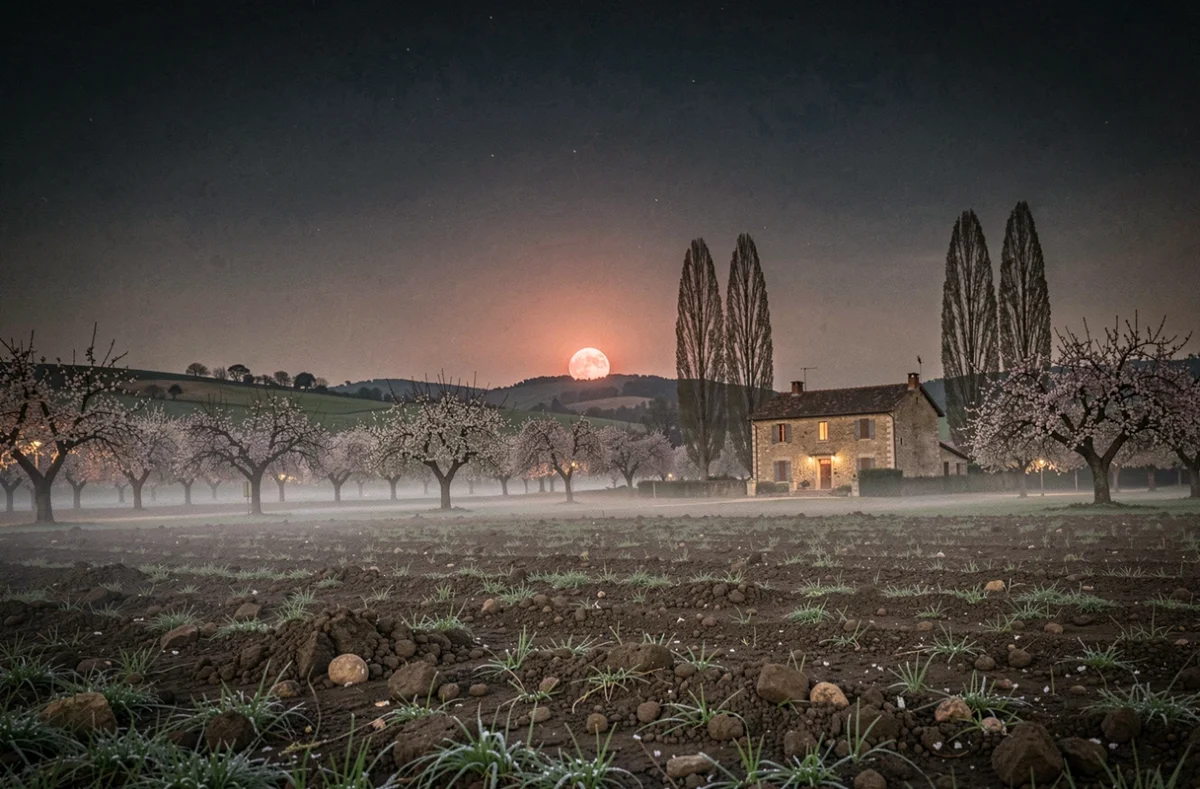
Climate change alters the situation in a counterintuitive way. Milder winters push buds to break dormancy earlier. As a result, when a late cold snap occurs during the red moon, plants are already in active growth phase, making them much more vulnerable than they were thirty years ago on the same date.
Météo-France indicates a decrease in the annual average of frost days between the periods 1961-1990 and 1991-2020. Less frost on average, but spring cold snaps hitting already active plants. For a gardener, this means that the reliable last frost date is moving back less quickly than the budding date.
In practice, one can no longer rely solely on the calendar. Observing the state of one’s own plants (open buds, first leaves unfurled) provides more useful information than the date of the day to decide whether to protect them or not.
Concrete protection of crops during the period from April 17 to May 16, 2026
Here are the actions that make a difference when gardening in areas exposed to red moon frosts:
- Install winter covers on young plants as soon as the nighttime forecast predicts clear skies and light winds. A sufficiently dense weight (type P30 or P50) limits radiation without crushing the shoots.
- Generously mulch the base of recent plantings: mulch slows down heat loss from the soil and can gain one or two crucial degrees at the root level.
- Avoid planting frost-sensitive species (tomatoes, zucchinis, peppers) before mid-May in basin areas or at altitude. Waiting until the end of the red lunar month significantly reduces the risk.
- Water the soil at the end of the day during dry weather: moist soil stores more heat and releases it during the night.
Feedback varies on the effectiveness of antifreeze candles or water containers placed between rows. For a family vegetable garden, the winter cover remains the most reliable and cost-effective solution.
Red moon and blood moon: do not confuse two distinct phenomena
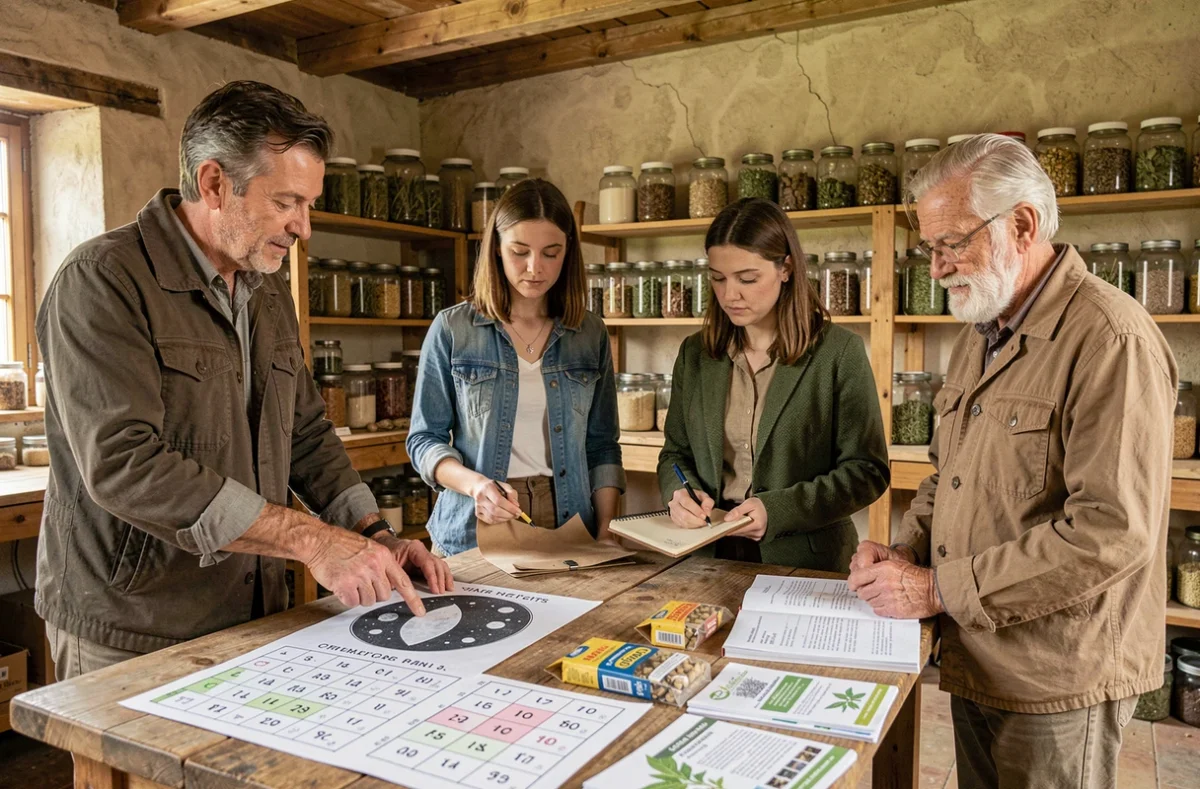
Confusion arises every year. The red moon is a marker of the agricultural lunar calendar: the first complete lunar month after Easter, from April 17 to May 16 in 2026. It does not produce any change in the color of the celestial body.
The blood moon refers to the coppery appearance of the Moon during a total lunar eclipse. In 2026, a total lunar eclipse is expected on March 3, well before the red moon. These are two unrelated events, one astronomical, the other agro-meteorological.
For sky observation enthusiasts, the red moon period still offers beautiful nights: the clear skies that favor frost also provide excellent visibility. One can thus take advantage of the lunar month to observe the lunar phases, provided to protect the vegetable garden before looking up.
Sowing and gardening work: adapting the lunar calendar to the terrain
Many gardeners follow the lunar calendar to plan sowing and planting. During the red moon, caution means focusing sowing under cover and postponing transplanting into the ground until after May 16, 2026.
Leafy vegetables (lettuces, spinach) tolerate a moderate cold snap better than fruiting vegetables. Therefore, one can stagger the risks: sow lettuce directly in the ground by the end of April, but keep tomatoes and eggplants in a greenhouse or frame until the end of the lunar month.
The last point to remember is the location. A garden in a valley bottom in Vercors does not react like a garden by the sea in Brittany. The red moon requires the same vigilance everywhere in France, but the margins for maneuver depend on the microclimate of each plot. Consulting the frost data from the nearest Météo-France station remains the most useful reflex to adjust planting dates.