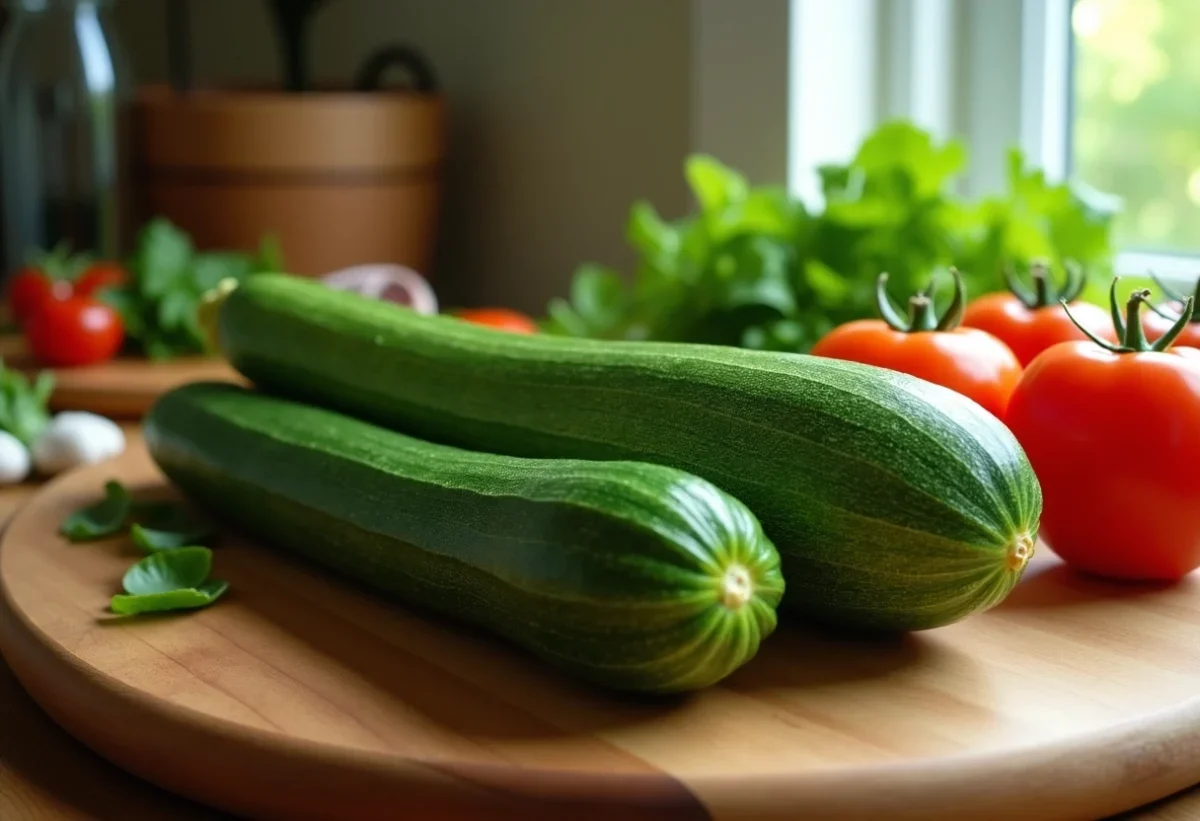
Preparing a balanced and tasty meal often requires making the right choices when it comes to vegetables. Zucchini and cucumber, two popular green vegetables, are often at the center of culinary debates. Zucchini, with its tender texture and mild flavors, is perfect for hot dishes like ratatouille or gratins. In contrast, cucumber, crunchy and refreshing, is ideal for summer salads and light appetizers.
Choosing between these two vegetables mainly depends on the type of dish one wishes to prepare. Zucchini, rich in fiber and antioxidants, adds a nutritious touch to cooked dishes. Cucumber, on the other hand, is excellent for hydration and provides immediate freshness. Both vegetables are easy to incorporate into a daily diet, each offering unique advantages in terms of taste and health benefits.
The nutritional and health benefits of zucchini and cucumber
Differentiating zucchini and cucumber is essential for understanding their nutritional contributions. Zucchini, belonging to the cucurbitaceae family, like cucumber, is distinguished by its slightly speckled and smooth skin. It is rich in fiber, vitamins, and minerals, making it particularly beneficial for the functioning of the immune system and the formation of red blood cells. Consumed regularly, it contributes to digestive balance thanks to its dietary fiber.
Cucumber, for its part, is known for its tougher and grainy skin. This refreshing vegetable is composed of 95% water, making it ideal for hydration. Cucumber is a valuable source of vitamins and minerals, particularly vitamin K, essential for blood clotting, and vitamin C, which strengthens the immune system. It is low in calories, making it perfect for low-calorie diets.
- Fiber and vitamins: zucchini and cucumber are rich in fiber, vitamins, and minerals.
- Hydration: cucumber, made up of 95% water, is ideal for maintaining good hydration.
- Low in calories: both vegetables are perfect for those looking to monitor their calorie intake.
Incorporating zucchini and cucumber into your daily diet can improve your overall health. These vegetables, belonging to the same cucurbitaceae family, each offer unique and complementary benefits. 
How to choose and cook zucchini and cucumber
To choose your zucchinis and cucumbers well, prefer firm vegetables without blemishes. Zucchini is distinguished by its smooth and slightly speckled skin, while cucumber has a tougher and grainy skin. Raphaël Gruman, a nutritionist dietitian, advises checking freshness by gently pressing on the skin: it should be firm and elastic.
Preparation and cooking
Zucchini lends itself to many preparations. Raw, it adds a crunchy and refreshing touch to your salads. You can also cook it steamed or sautéed, with a drizzle of olive oil, to retain its nutrients. Low-temperature cooking is recommended to preserve vitamins and minerals.
Cucumber, for its part, is often eaten raw. For a simple and quick salad, slice it thinly, add a drizzle of olive oil and vinegar, then season with salt and pepper. You can also prepare a cold soup, perfect for summer: blend cucumbers with yogurt, garlic, and dill.
- Zucchini: raw in salad, steamed or sautéed.
- Cucumber: raw in salad, cold soup.
For more elaborate recipes, let yourself be inspired by chefs like Florence Foucaut, a nutritionist dietitian, who offers creative and healthy dishes. Incorporating zucchini and cucumber into your daily diet allows for variety while benefiting from their nutritional advantages.