
A wireless switch is a control device that transmits a command (turn on, turn off, dim) via radio signal to a receiver connected to the lighting circuit. Unlike a traditional switch, it requires no wiring between the wall control point and the light fixture. This feature radically changes the need for an electrician, as the difficulty no longer lies in the same part of the circuit.
The control point itself, often a sticky pad or a battery-operated box, can be installed in just a few minutes. The complexity shifts to the receiver side, where the radio signal must be converted into electrical switching on the existing circuit.
Radio receiver and micromodule: the real technical knot of the installation
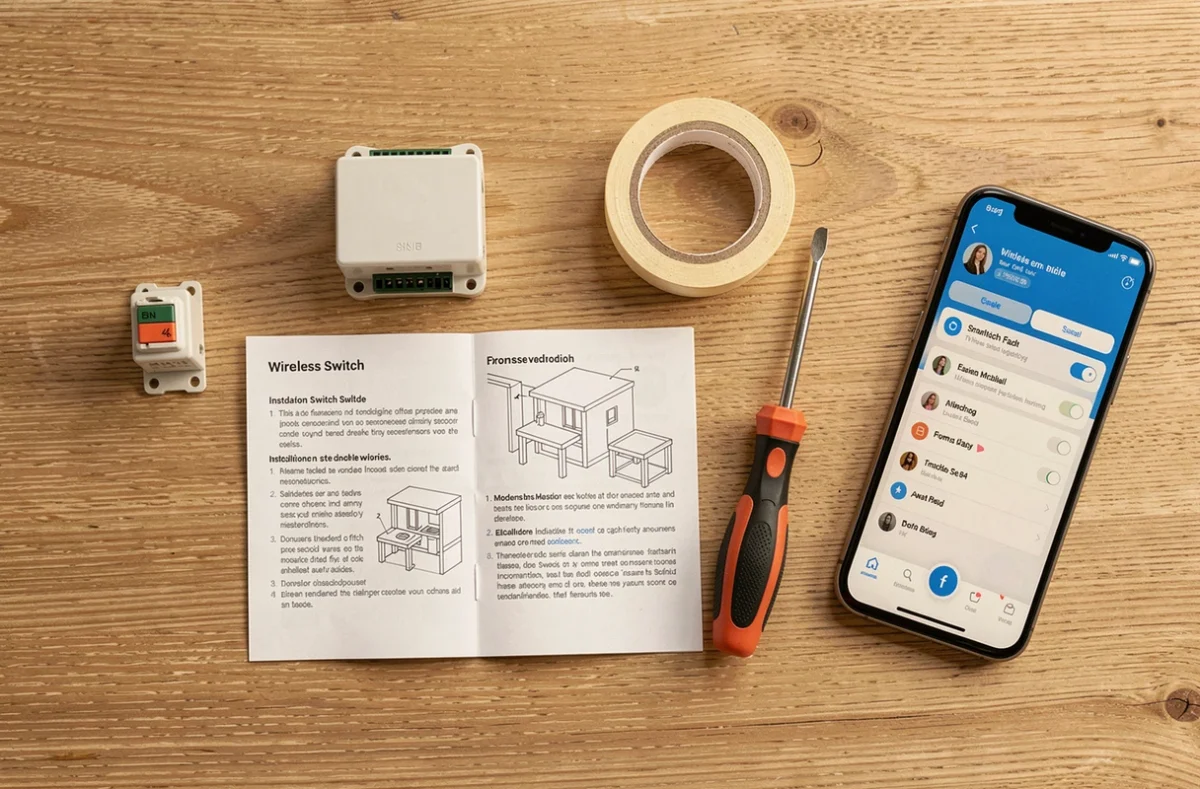
Most kits sold in stores include two elements: the wall switch (the transmitter) and a receiver micromodule to be connected to the circuit. This receiver fits into the recessed housing of the light fixture, behind a false ceiling, or in the electrical panel, depending on the model.
Connecting the receiver involves handling the phase, neutral, and lamp return. In newer homes compliant with the NF C 15-100 standard, these three conductors are present in the recessed box. In older homes, the neutral is often absent from the switch box, complicating matters.
When the neutral is missing, several solutions exist: install the micromodule directly in the ceiling (near the light fixture, where the neutral is always available), add a compensator to the circuit, or run an additional conductor. All three options require a precise understanding of the existing wiring. As detailed in articles from Inside Out, this step determines whether an individual can act alone or not.
Battery-powered, battery-free, or wired connected switch: very different requirements
The term “wireless switch” encompasses at least three distinct technologies, and the level of skill required varies greatly from one to another.
Battery-powered radio control
The transmitter operates with a button cell battery (often CR2032). It is installed using double-sided adhesive or screws, with no electrical connection on the control side. The receiver, however, needs to be wired to the light circuit. This is the most common scenario in consumer brand kits.
Battery-free control (piezoelectric or kinetic)
The energy from finger pressure generates the radio signal. No battery to replace, no wire to run for the transmitter. The receiver follows the same wiring logic as a battery-powered model. The advantage is zero maintenance on the control side.
Connected switch powered by mains
Some connected switches (Zigbee, Z-Wave, Wi-Fi) replace the old recessed switch and require a permanent power supply via the neutral. In an older home lacking neutral at the control point, the intervention of an electrician becomes almost necessary to run the missing conductor or rethink the wiring.
When the intervention of an electrician is truly necessary
Installing the wall transmitter alone never justifies calling in a professional. The question only arises for connecting the receiver to the existing circuit. Three situations make the intervention of an electrician particularly relevant:
- The neutral is absent from the recessed box and the chosen micromodule requires it to function. Running a new conductor in an existing conduit requires knowledge of cable routing and adherence to section and protection rules.
- The overall electrical installation is outdated (absence of differential circuit breaker, fabric wiring, lack of ground). Adding a radio module to an unprotected circuit resolves nothing and may mask a more serious fault.
- The circuit in question serves a wet room. The NF C 15-100 standard defines safety volumes in bathrooms, and all electrical equipment must respect minimum distances from water points.
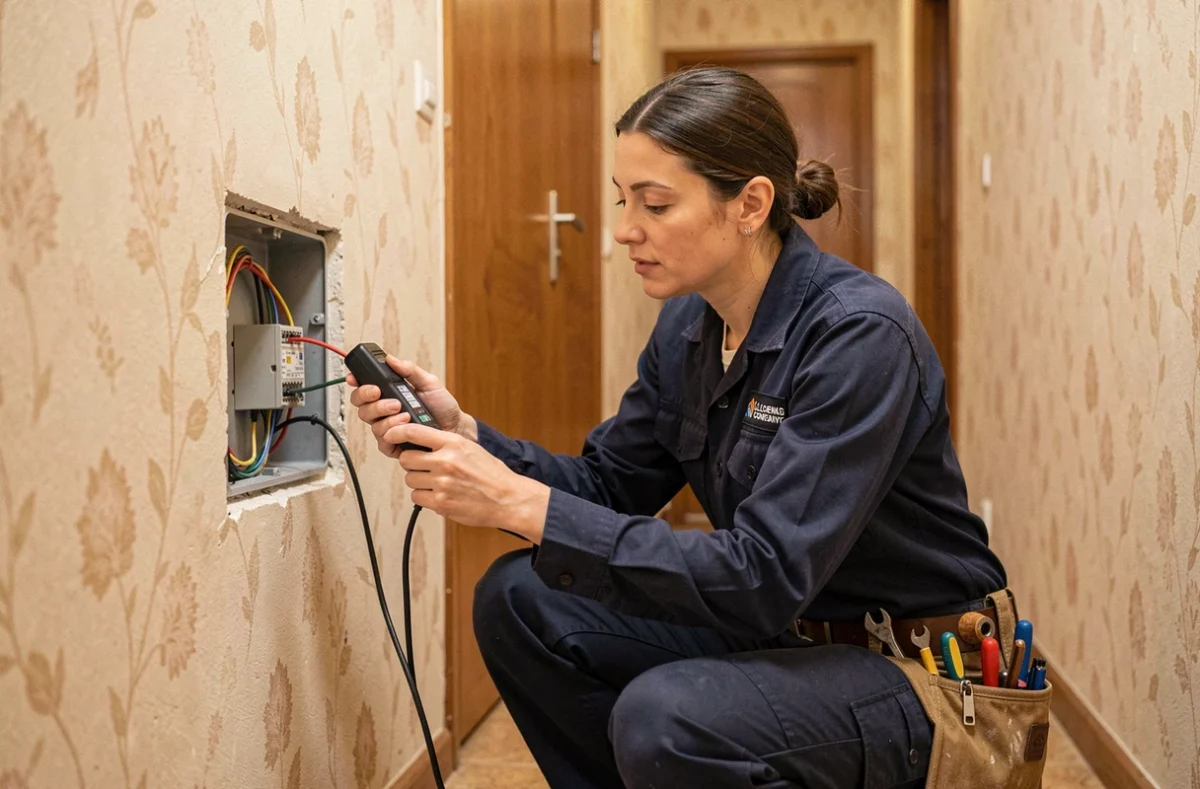
Outside of these cases, a DIY enthusiast comfortable with the concepts of phase, neutral, and ground can safely connect a micromodule, provided they turn off the circuit breaker for the relevant circuit and check for the absence of voltage with an appropriate tester.
NF C 15-100 and wireless switch: what the standard really imposes
The revised series of NF C 15-100, published in August 2024, has become the reference for new installations and complete renovations since September 1, 2025. This update strengthens the requirements for protection, identification, and scalability of circuits.
The occasional replacement of a switch with a wireless device does not automatically render the entire installation non-compliant. The standard applies in its entirety only to new installations or major renovations. Replacing a two-way switch with a radio kit in an existing home does not trigger the obligation to bring the entire panel up to the latest specifications.
However, if the project is part of a broader renovation (adding circuits, modifying the panel), overall compliance comes into play. An electrician can then assess whether the switch replacement fits into a project subject to the new series or remains an isolated act without normative consequences.
Concrete precautions for installation without an electrician
For a DIY enthusiast choosing to install a wireless switch kit with receiver alone, a few preliminary checks are essential for success and safety:
- Identify the type of existing setup (single switch, two-way, relay) to choose a receiver compatible with the existing wiring.
- Check for the presence of the neutral in the box where the receiver will be housed. A simple voltage tester between the phase and the blue wire is sufficient to confirm.
- Ensure that the circuit breaker for the circuit is turned off before any manipulation, and check for the absence of voltage with a multimeter directly on the terminals.
- Make sure that the load of the light fixture (in watts) does not exceed the maximum capacity of the receiver, often indicated on the module’s technical sheet.
Compatibility between transmitter and receiver relies on the radio protocol used. Mixing products from different brands operating on distinct protocols (Zigbee, Z-Wave, proprietary 433 MHz) will yield no results. Choosing a transmitter-receiver kit from the same range remains the most reliable way to avoid pairing issues.
The last point to keep in mind: a wireless switch does not eliminate the existing electrical circuit. If the old wired switch controlled a two-way setup, the wiring remains in place behind the plate. Properly neutralizing it (isolating the conductors, closing the box) is part of the installation, and neglecting this step exposes one to a risk of short circuit in the long term.