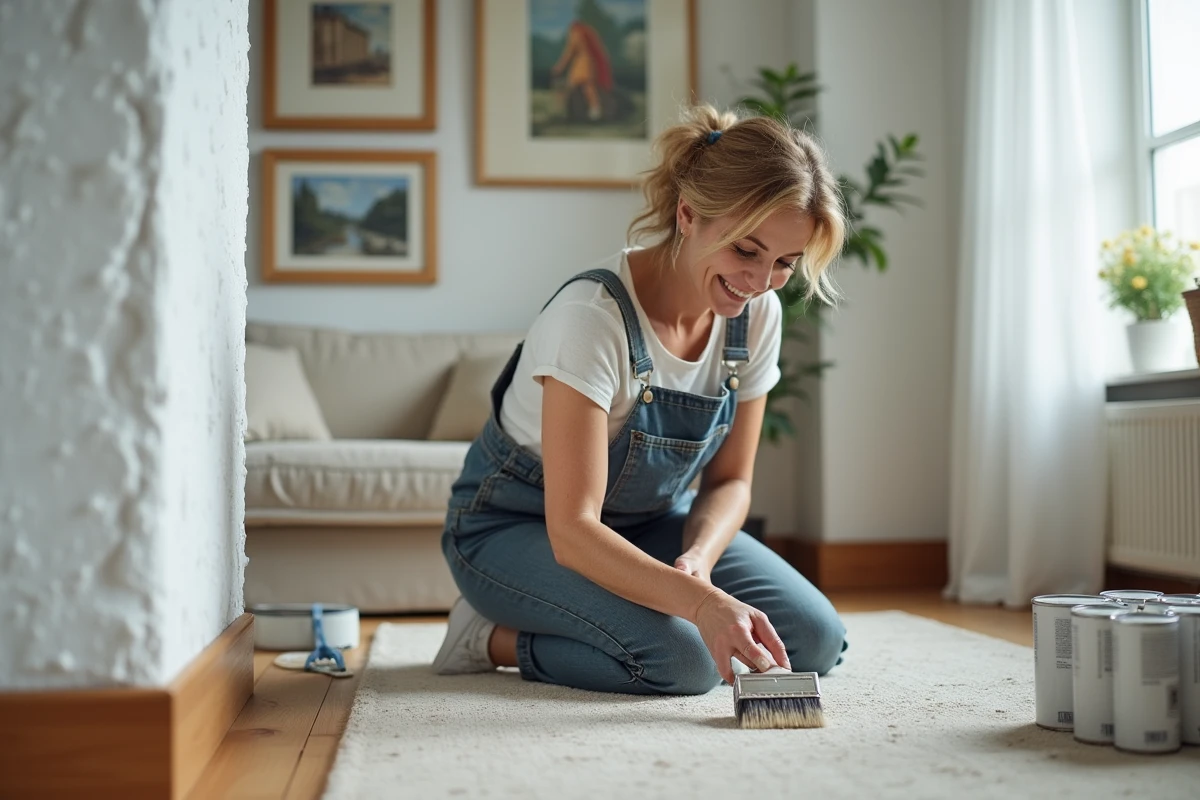
Sea rush leaves no room for improvisation. Its raw texture, its capricious absorption, everything about this material demands respect for the rules of the game if one wants to avoid missteps. A poorly chosen paint, a neglected preparation, and you can be sure to see warped fibers, discolorations, or indelible marks settling in permanently.
Few natural coverings combine ecological awareness and maintenance demands to such an extent. However, with the right reflexes and a minimum of rigor, this floor can withstand the years without losing either its strength or its authentic appearance.
Sisal, sea rush: understanding the differences and making the right choice
The sea rush currently holds a prime position among those who want material, nature, without artifice. It is an aquatic plant primarily cultivated in China, cut and woven to offer a lively, dense mesh, without embellishment. Naturally waterproof, robust against stains and humidity, it offers only its original colors: a range between beige, green, and sometimes brownish hues. Don’t expect to radically change its shade; you will only soften or nuance its color, never mask its weave under paint.
Alongside it, sisal, derived from a variety of agave, charms with its flexibility and the diversity of its colors. But it does not favor the kitchen or the bathroom: even a slight excess of humidity can harm it. As for coconut, it withstands wear well, but it is frankly afraid of water and finds its place less frequently in humid rooms.
Once the choice of material is made, the type of room guides the final selection. In areas with frequent traffic or exposed to steam and splashes, sea rush stands firm where sisal prefers the temperate atmosphere of a bedroom. One must also consider the nature of the intervention: properly preparing the surface is already protecting your investment. Moreover, to apply paint on sea rush, every step matters, from acclimatization to product selection.
Advantages, limitations, and suitable uses of these ecological coverings
The sea rush has managed to convince enthusiasts of raw materials and those renovating with longevity in mind. It retains heat, muffles noise, easily adapts to differences in humidity, and the lively nature of living spaces. From the living room to the bathroom, it knows how to be appreciated for its warm character and unchanged look.
However, its resistance is not without flaws. The fibers eventually wear out under intensive use. On stairs, it is less reassuring, prone to slipping. And even when opting for paint, the plant structure always imposes its signature, making complete uniformity impossible.
Here are the main points to remember when making your decision:
| Advantages | Limitations | Recommended Uses |
|---|---|---|
|
|
|
For the work, it is better to surround yourself with a professional, especially during installation or replacement. Maintenance does not require a complicated strategy: vacuuming, lightly dampening with clear water. Powerful detergents do not work well with it. It’s best to capitalize on its simplicity and durability, while still being aware of its distant origin.
Prices, maintenance, renovation: the real user manual before starting
This covering appeals as much for its style as for its simplicity: everything hinges on precision. In terms of budget, expect to pay between 7 and 50 €/m² for the material, depending on thickness and quality, plus the installation cost, which ranges from 30 to 50 €/m² depending on the project. Getting a detailed quote in advance allows for anticipating actual costs, including for floor preparation.
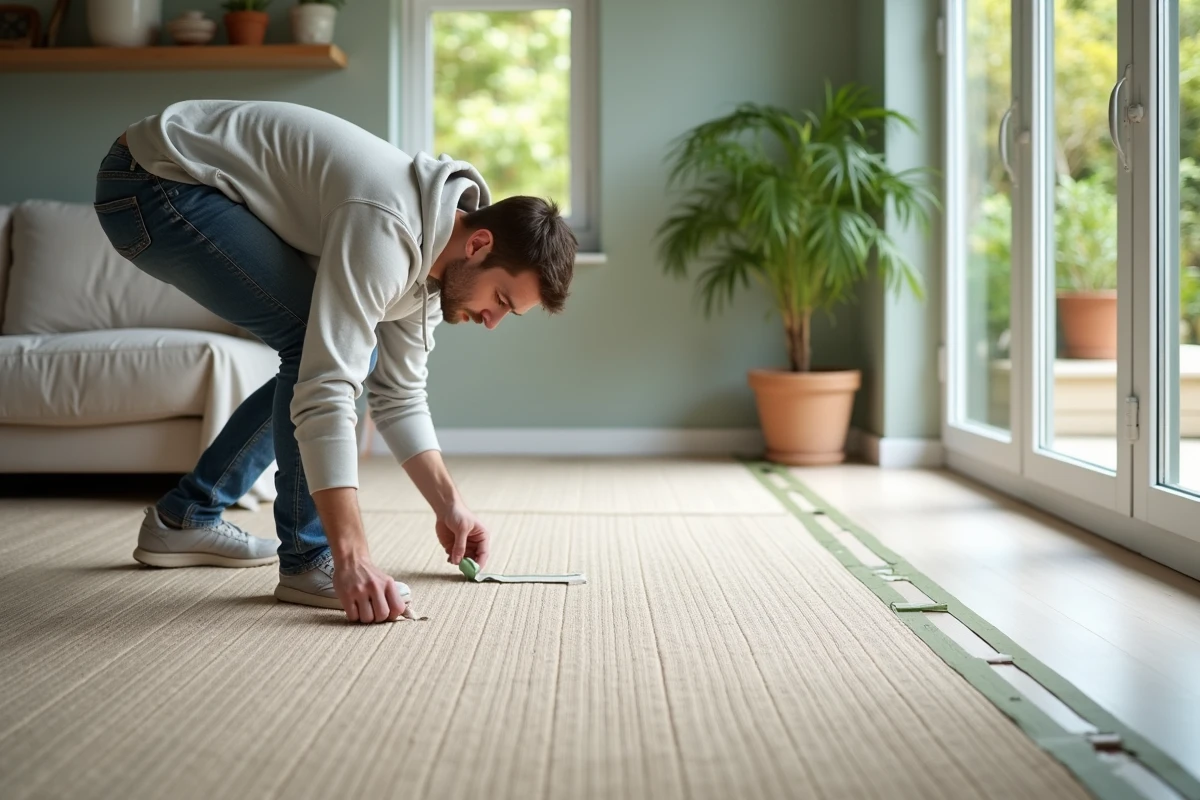
A fundamental point: allow the sea rush to acclimatize to the room for a few days before installation. To fix this naturally living floor, there are specific glues or double-sided adhesive available. When it comes to cutting, there is no room for haste: a sharp cutter or sturdy scissors will do the trick. It is essential to work methodically to avoid any deformation.
Maintenance could not be simpler. Regular vacuuming, a slightly damp mop, that’s all it requires. Stains are no exception: no abrasive products or solvents, a bit of white vinegar or baking soda is more than sufficient. A little bonus, sea rush emits no volatile compounds, which preserves indoor air quality. And if the surface gets damaged, paint can refresh it while respecting the fiber and its unique appearance.
Over time, sea rush evolves, nuances its patina, and reminds, fiber by fiber, that choosing a living floor means accepting that it refuses to be perfectly tamed.