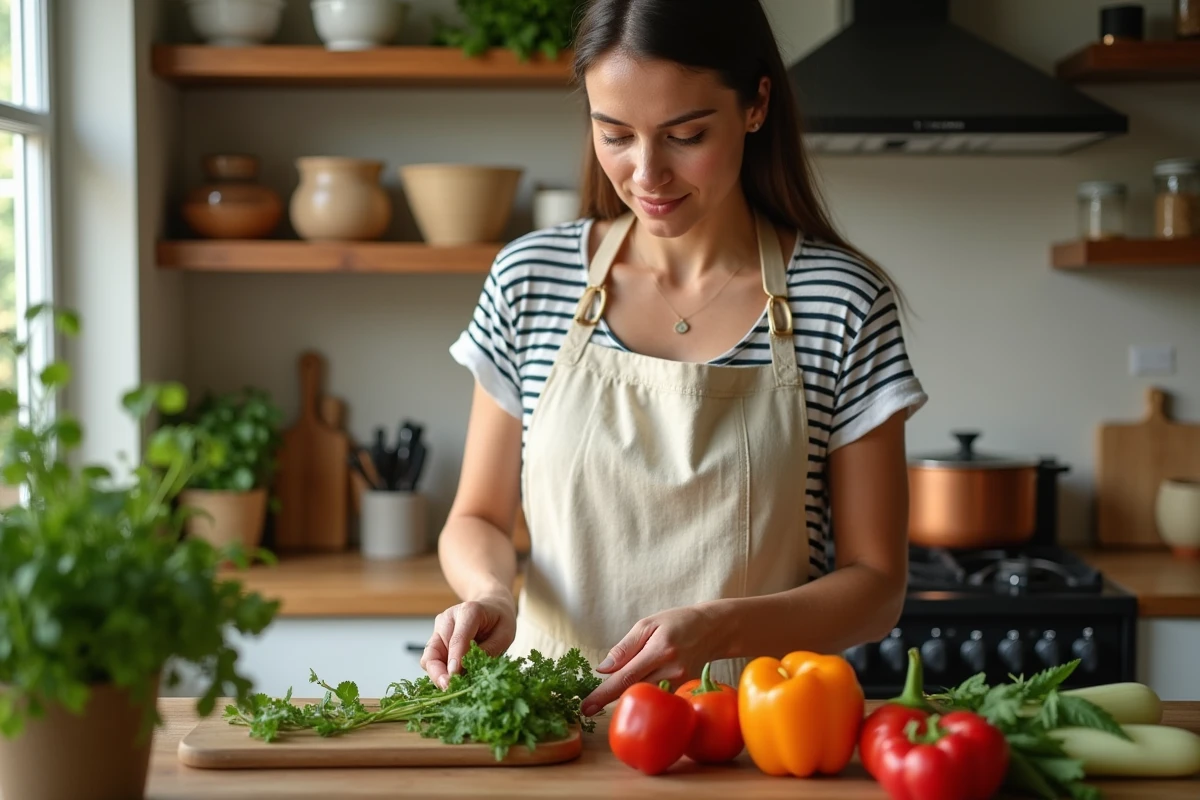
A cluttered work surface, a tired backsplash, utensils lying around without logic: we all know that moment when the kitchen becomes a space endured rather than chosen. Elevating your kitchen daily doesn’t necessarily require major renovations. A few targeted adjustments to materials, colors, and organization can radically change the experience you have, morning and evening.
Backsplash and work surface: the two surfaces that transform a kitchen
When you want to refresh a kitchen without tearing everything apart, you start with the most visible surfaces. The backsplash and the work surface occupy the majority of the visual field between the upper and lower cabinets. Changing one or the other (or both) creates a disproportionate effect relative to the investment.
For the backsplash, large-format tiles or lacquered glass simplify maintenance and visually enlarge the space. Thin joints reduce areas for grease accumulation. On a work surface, solid wood treated with oil brings immediate warmth but requires regular maintenance (light sanding, oiling every six months or so).
High-pressure laminate now mimics stone or wood very well and is more stain-resistant, making it a pragmatic choice if you cook often.
We found useful resources to go further on the L’Art du Goût en cuisine website, particularly for combining materials and culinary preparation styles.
A often overlooked point: the junction between the backsplash and work surface must be watertight and clean. An aged or detached silicone joint instantly gives a worn look to the whole, even with new materials.

Colors and lighting in the kitchen: creating an atmosphere without repainting everything
Color is often associated with wall paint, but in the kitchen, it’s the cabinet facades, accessories, and lighting that set the tone. Repainting a wall is pointless if the lighting is a harsh neon overhead.
Play with contrasts rather than a single color
Matte black on lower cabinets paired with white upper cabinets creates a depth that a total look does not allow. You can also limit yourself to a single strong element: a colored sink, brushed brass handles, or an appliance in an offbeat shade.
Under-cabinet lighting changes everything for preparation comfort. A simple warm white LED strip (no cold white, which strains the eyes) is enough to make the work surface inviting. You can see the food better, cut with more precision, and the kitchen becomes a place you want to stay in.
Adapt the light temperature to the area
- Preparation area (work surface, sink): neutral to slightly warm light, directed downwards, to see clearly what you’re doing without shadows
- Dining area or island: pendant with dimmer, warm light, to create a table atmosphere without glaring
- Ambient lighting (niche, display case, baseboard): very low-intensity LEDs, useful in the evening for moving around without turning on the ceiling light
Feedback varies on the choice between recessed spots and strips, as it depends on the ceiling configuration and height under cabinets. It’s advisable to test with a portable lamp before drilling.
Visible storage and zero waste layout in the kitchen
Closed storage has long been the norm, but a mixed approach is emerging: open shelves for beautiful and frequently used items, closed cabinets for the rest. This logic comes from biophilic design, which prioritizes the readability of space and the presence of natural materials in view.
Specifically, you can fix one or two raw wood shelves above the work surface to hold oils, spices in jars, and cutting boards. The rest (cleaning products, stocks, occasional small appliances) disappears behind closed facades. This separation between visible and invisible reduces visual clutter and speeds up preparation.
Integrate eco-friendly solutions without sacrificing aesthetics
Manufacturers like Ikea and Schmidt have been offering modules designed for sorting and bulk for a few years: sorting bins integrated into under-sink drawers, storage sized for standard jars, and even discreet compost bin locations. These are no longer makeshift solutions, but kitchen elements designed from the outset.
- Under-sink drawer divided into three compartments (recyclables, compost, residual waste) for sorting without leaving the workstation
- Vertical storage next to the refrigerator for storing glass bottles, bulk jars, and reusable bags
- Hook or magnetic rail on the backsplash to hang towels, utensils, and avoid accumulations on the work surface
You save time daily, but also free surface area. Every visible object must have a reason for being there.
Kitchen decoration: the details that make a difference every day
Major items (furniture, appliances, coverings) catch attention during a project, but it’s the micro-details that maintain the pleasure of cooking week after week.
A well-chosen faucet alters the overall silhouette of the sink. A gooseneck model in matte black or brushed stainless steel replaces a basic mixer without heavy plumbing work. Cabinet handles, when switching from plastic to metal or leather, change the tactile sensation with each cabinet opening.
A green plant placed near the window or a small herb planter on the sill brings life, color, and a direct culinary function. Basil, chives, or parsley grow well in a bright indoor space and naturally scent the area.
Enhancing your kitchen is less about a decor budget and more about a series of coherent choices between materials, light, and organization. A work surface suited to your habits, lighting designed by zone, and storage that separates beauty from utility: these three axes, treated with care, transform any kitchen into a space you enjoy returning to.