
A new battery left in a drawer for six months can lose a significant part of its capacity, sometimes irreversibly. Storing batteries is not just about putting them somewhere: temperature, charge level, and even proximity to other objects directly influence their lifespan. Here’s how to avoid the most common mistakes and keep your batteries in good condition.
Swollen or dented battery: the warning sign before storage
Before storing a battery, take ten seconds to examine it. A bulging casing, a crack, a whitish deposit on the terminals (a sign of corrosion), or an unusual smell are indicators of internal failure. A swollen battery should never be recharged or stored with others.
This visual inspection reflex is often neglected. A battery that has suffered a shock, even a minor one (falling from a countertop, being bumped by a tool in a trunk), can develop an invisible internal short circuit. The thermal risk then significantly increases, especially with lithium-ion technologies.
Isolate any suspicious battery in a non-flammable container, away from others. If you follow battery storage advice, you will see that physical separation between healthy and damaged items is one of the simplest preventive measures to apply.
Ideal charge level for long-term storage
Have you ever noticed that a new phone comes out of its box half charged? It’s no coincidence. Manufacturers ship their devices with a partial charge because it’s the state that best preserves the internal chemistry of the battery.
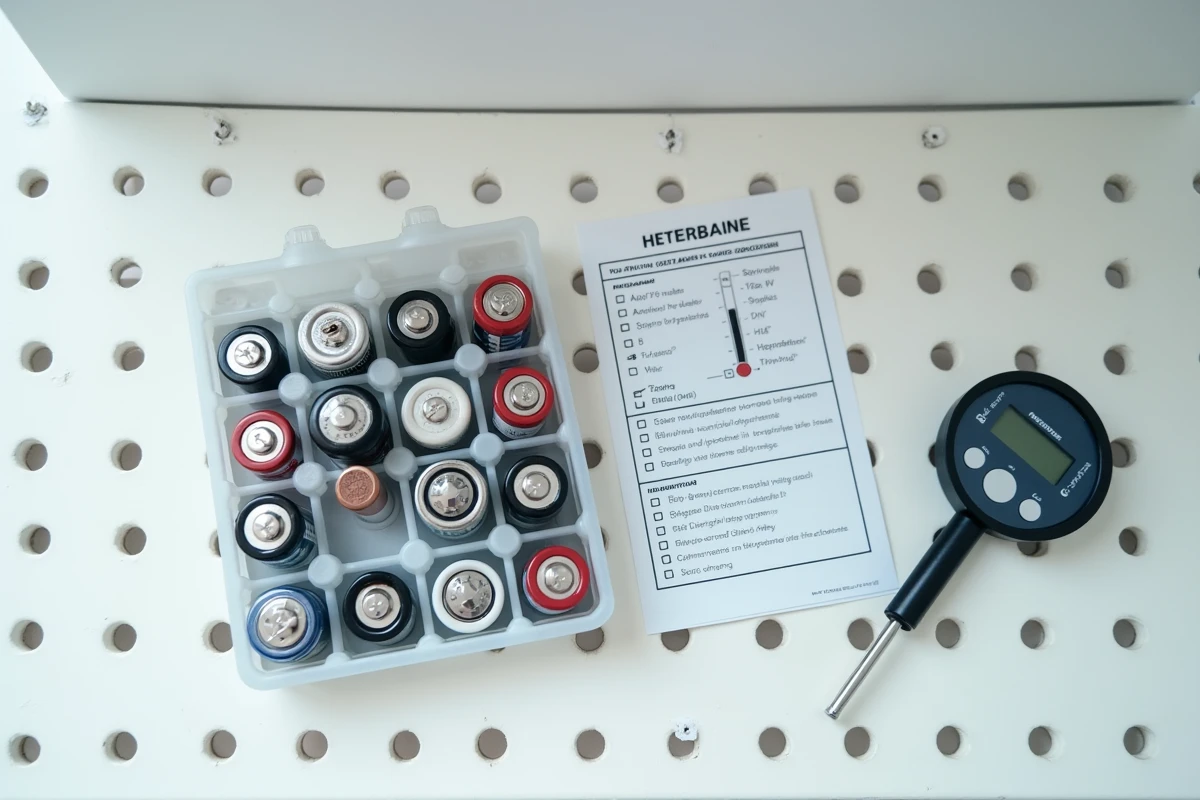
Storing a lithium-ion battery between 40 and 60% charge limits calendar aging. At full charge, internal chemical reactions accelerate, even without use. The result: permanent capacity loss after a few months.
Conversely, leaving a battery completely discharged for a long time causes what is known as deep discharge. Some batteries do not recover at all. Older generations (NiMH, lead) are particularly sensitive to this phenomenon, with a marked tendency for self-discharge.
The practical rule:
- Lithium-ion batteries (tools, bikes, electronic devices): charge them to half capacity before storing, then check the level every three months
- NiMH batteries (AA, AAA rechargeable batteries): store them charged to about half and recharge periodically, as they discharge faster than lithium
- Lead batteries (seasonal vehicles, solar systems): connect a smart charger in maintenance mode or regularly check the voltage to avoid sulfation
Temperature and humidity: the two silent enemies
Heat accelerates all chemical reactions, including those that degrade a battery. A garage in full sun during summer or an uninsulated attic are the worst places to store your batteries.
A dry, temperate, and ventilated place remains the best option. The ideal temperature is in a cool range, far from extremes. Intense cold (below zero) can also damage certain chemistries, particularly lithium-ion, by weakening the electrolyte.
Humidity, on the other hand, promotes corrosion of terminals and metal contacts. Leaks can occur on alkaline batteries stored in a humid environment. For solar energy storage systems or home backup batteries, this parameter becomes even more important: installation in a room exposed to condensation reduces the lifespan of the entire system.
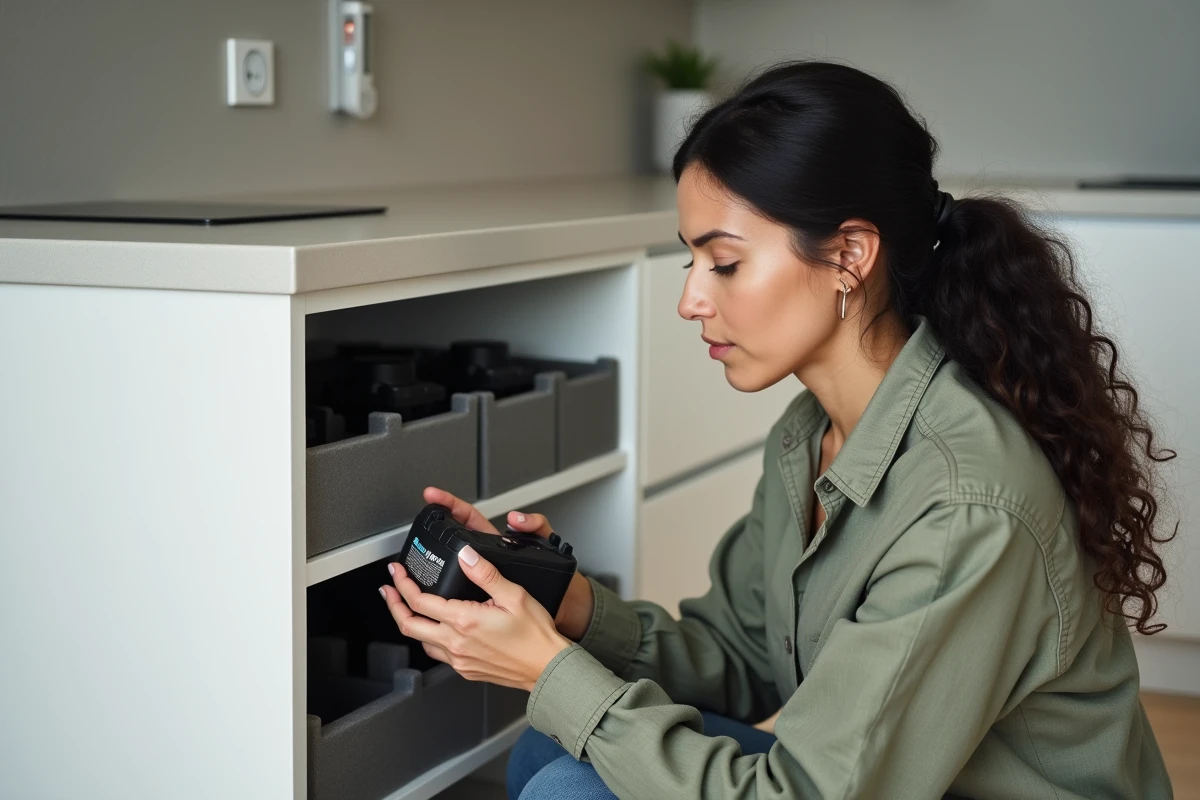
Some concrete precautions:
- Avoid direct contact with bare concrete floors, which can transmit moisture by capillarity (place batteries on a shelf or board)
- Keep batteries away from any heat source: radiator, chimney flue, south-facing window
- Do not store batteries next to flammable materials (cardboard, solvents, oily rags)
- Protect the terminals with their original caps or insulating tape to prevent accidental short circuits
Periodic checks during storage: the forgotten gesture
Putting a battery on a shelf and forgetting about it for a year is the classic scenario. The problem: when you retrieve it, it is often dead or very weakened.
A check every three to six months avoids unpleasant surprises. This check involves verifying two things: the charge level (with a basic multimeter or the built-in indicator) and the physical condition (no swelling, no visible corrosion, no leaks).
For seasonal vehicle batteries (motorhomes, motorcycles, lawnmowers), this verification takes on an additional dimension. A lead battery that stays below 50% charge for several months can sulfate irreversibly. Periodically recharging a stored battery significantly extends its lifespan.
If you use a solar energy storage system, the logic is the same. Charge and discharge cycles must remain within the ranges recommended by the manufacturer, even during periods of inactivity. A smart charger, capable of maintaining the charge without overcharging, is a modest investment that protects often expensive batteries.
Everyday safety: what changes with high-capacity batteries
Storing high-capacity home batteries (solar systems, backup batteries) raises fire safety questions that AA batteries do not. The energy contained in these systems is sufficient to fuel a fire that is difficult to control in the event of thermal runaway.
Separating damaged batteries from those in good condition is the first rule. The second: never store these systems in a room without ventilation. In case of failure, lithium-ion batteries emit flammable and toxic gases that must be able to escape.
The risks do not concern only professionals. An electric bike stored in a closed closet with its battery charging is a common household scenario that can go wrong if the battery has an undetected defect.
Correctly storing a battery ultimately comes down to three habits: checking its condition before storing it, maintaining an intermediate charge level, and choosing a suitable location. These simple gestures apply equally to a remote control battery as to a complete energy storage system.